Author: Yesha Karol

  • Do We Ever Reach the Finish Line? Zeno’s Dichotomy Paradox Explained

    Do We Ever Reach the Finish Line? Zeno’s Dichotomy Paradox Explained

    In the depressing trenches of AP studying, your eyes fixate on a half-opened bag of chips right across the living room. Naturally, you decide to move towards the chips with purpose. It seems simple—but according to Zeno of Elea, you might never actually reach it. 

    Of course, nothing should come between you and your chips. It turns out Zeno isn’t some random, but an incredibly famous Greek philosopher, well-known for proposing various interesting and mind-boggling paradoxes. Zeno was a student of Parmenides and because of that, many tend to believe his paradoxes were meant to defend his teacher’s idea of an unchanging reality. However, this interpretation mostly comes from later speculations, including those from Plato’s dialogues. Some of his paradoxes include The Antinomy of Large and Small, The Antinomy of Limited and Unlimited, and The Paradoxes of Motion—one of which is the Dichotomy Paradox. 

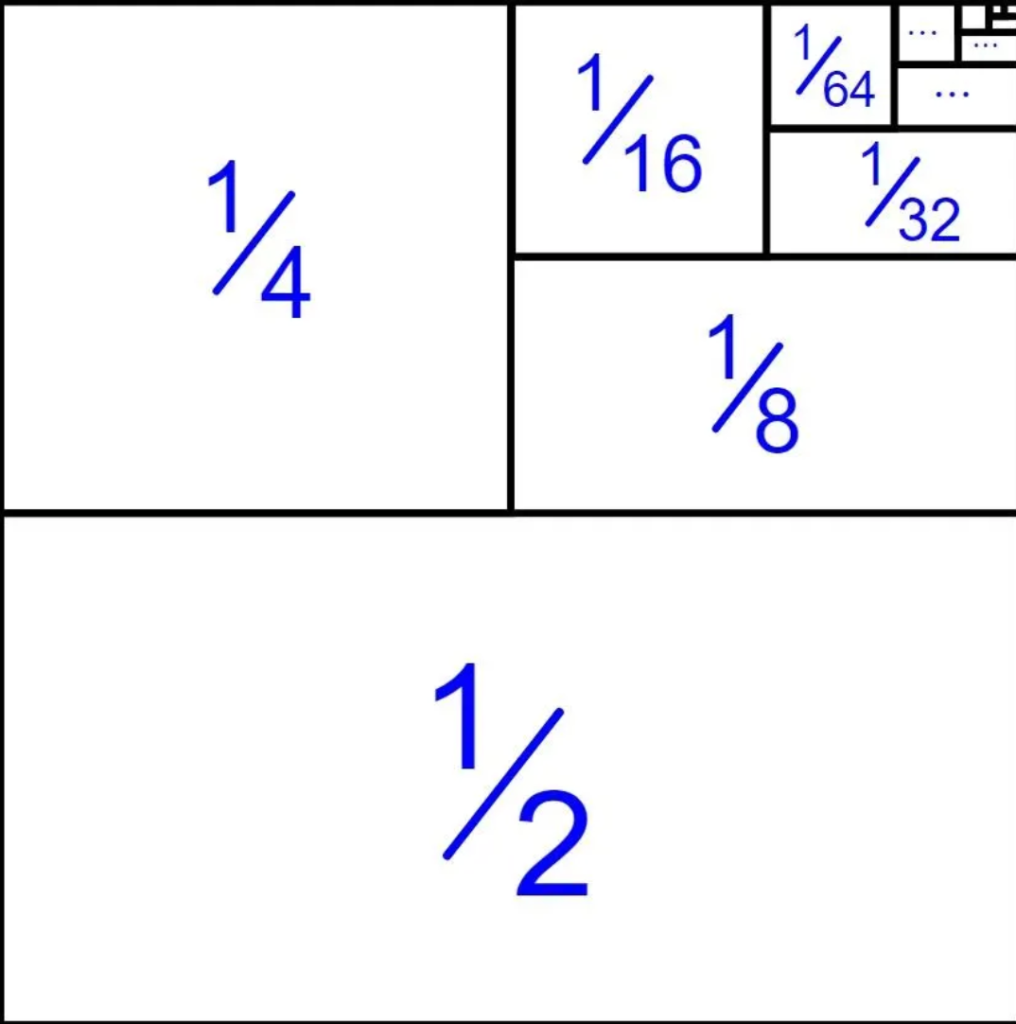
    The Dichotomy Paradox is explained by Zeno as follows: let’s say a runner intends to meet a goal. If the goal is one meter away, the runner must cover a distance of ½ meter, then ¼ meter, then ⅛  meter, and so on ad infinitum. Because this process continues indefinitely, Zeno argues that the runner can never reach the final goal. To expand, the regressive version of the Dichotomy Paradox states that the runner can’t even take the first step because any step may be divided conceptually into a first half and a second half. Before taking a full step, the runner must take a ½ step, but before that, he must take a ¼ step, but before that, a ⅛ step, and so forth ad infinitum. Seems convincing, right? 

    Well, no, not really. In fact, this paradox has been resolved in both math and physics. 

    To begin, let’s envision the runner with an impending goal of one meter. Zeno breaks this one meter into ½ meter, ¼ meter, ⅛ meter, and so on forever. To express the total distance traveled:

    Total Distance Traveled = ½ + ¼ + ⅛ + … 

    By a convergent geometric series, we see that the total distance equals exactly one meter. Hint: Notice how the sum of all the individual boxes still results in the whole box. See, even though the runner is completing infinitely many subdivisions, the total distance still adds up to a finite amount. 

    Unfortunately for us, mathematics alone isn’t enough to provide a full solution. To fully resolve this paradox, we need to realize that this paradox isn’t simply about dividing infinite parts, but the physical concept of a rate. Zeno’s paradox feels convincing because it only takes into account distance, without factoring in time. Motion isn’t limited to how far one moves, but how far one goes in a select amount of time. “The reason objects can move from one location to another (i.e., travel a finite distance) in a finite amount of time is because their velocities are not only always finite, but because they do not change in time unless acted upon by an outside force” (Siegel 2020). 

    There is another detail of the Dichotomy that needs resolution. How does Zeno’s runner complete the trip if there is no final step or last member of the infinite sequence of steps (intervals and goals)? During the process of “taking a trip,” can there be an absence of the crucial “last step”?  The Standard Solution answers “no,” while the intuitive answer “yes,” held by Zeno, Aristotle, and the average person today, must be rejected when embracing the Standard Solution. Even if there is no “last step,” the runner can still finish the journey because completion stems from the limit of infinitely many steps, not the final step itself. 

    Now, unfortunately for Zeno, you can confidently say you made it across the room and got the chips—no paradox stopping you.

    Authored by Chandhana Lingam Muhilan and Katie Huang

  • The Evolution of Autonomy Generative AI to Agentic AI

    The Evolution of Autonomy Generative AI to Agentic AI

    Artificial Intelligence – who hasn’t heard of it?


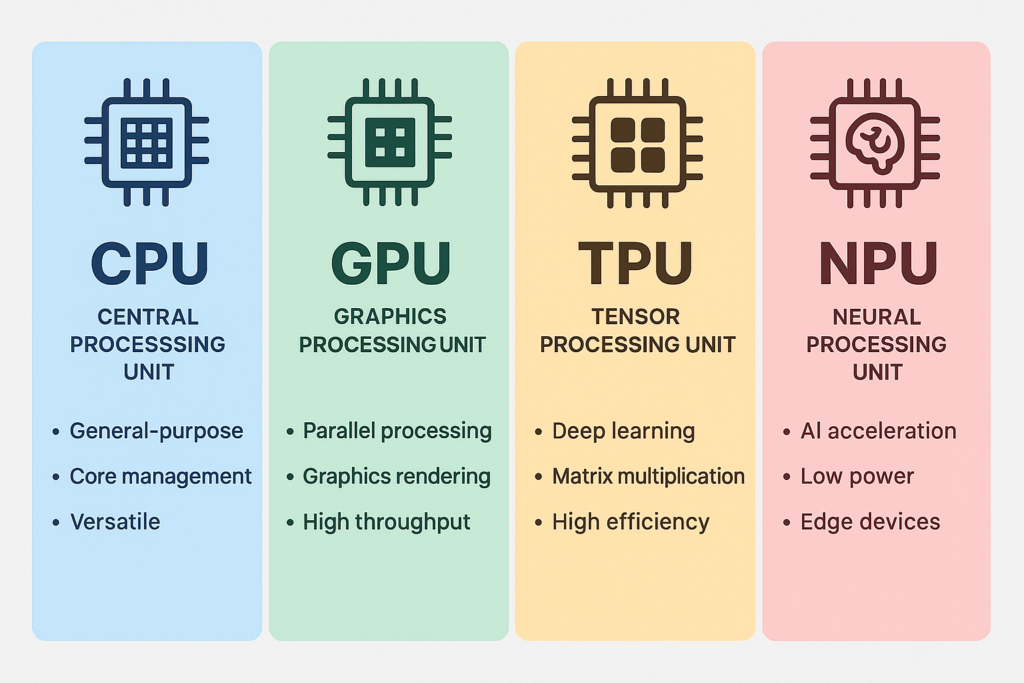
    For the past few years, we have truly lived in the world of AI innovation. And, of course, the most common places we have seen it used are in generative AI models such as ChatGPT, Gemini, Claude – the list goes on. Recently, however, the industry has seen the birth of a new model type: Agentic AI. These new models, including OpenClaw, can make autonomous decisions, opening an entirely new door across multiple industries.

    What Is Generative AI?

    To start, let’s get a background on the models we’re more familiar with. Generative AI is largely used for content creation, such as images, text, code, and audio, after receiving a prompt from a human user. While this in itself is a great accomplishment, it is still a reactive model– it can only respond to the instructions it is given. Beyond this, generative artificial intelligence has become highly skilled at understanding language and aiding in more creative ventures.

    However, it has its flaws. For one, generative AI models are not memory-retentive. They will not carry information over between sessions, sometimes even in the same one if the interaction is prolonged. This makes them unreliable for long-term projects and jobs.

    As we discussed before, a model like ChatGPT will not go beyond whatever the user asks of it. In other words, it has no autonomy. It’s a tool made for people to use and interact with, not one that will take its own initiatives. But as we will see, that may not be the case anymore.

    What Is Agentic AI?

    Agentic AI, in contrast to generative AI, has been designed especially for autonomy, meaning that it will be able to make its own decisions, among numerous other developments. According to the Aziro Marketing Team, agentic AI will take the large language models (LLMs) in use a step further by incorporating “goal-oriented planning, persistent memory, and execution engines” (Aziro 25). These assistive models will be able to take high-level goals and be able to make the decisions and actions to meet them, regardless of human interaction.

    Agentic AI is built on a reasoning-to-action loop. This can generally be broken down into five steps:
    Task decomposition – A larger goal is broken up into smaller subtasks
    Delegation – These tasks are split amongst relevant tools or agents
    Observation – The AI reviews the results of each section, modifying outputs or adjusting the framework accordingly
    Synthesis – It relates the outputs to certain tasks to complete the goal
    Adaptation – Based on results, the agent modifies its “route” and continues the loop
    From a human standpoint, this reasoning process can also help users and teams relying on the AI’s task management to trust its decisions more, as it should be able to provide concrete reasoning for each of its actions.

    As of right now, a major example of agentic AI is the tool OpenClaw. OpenClaw allows users to create various assistants for a multitude of desktop applications, including WhatsApp, Gmail, etc. These assistants are able to complete tasks within these apps, including sending emails, organizing schedules, and handling web research. The employment of AI will certainly propel numerous fields, including cybersecurity, healthcare, and finance.

    The Dilemma of Ethics

    As helpful as this type of model may seem, it certainly has its drawbacks, and at the forefront of worries at the moment is ethics. While the AI is being trained to mimic human decision-making, it may also take actions that go against common morals due to its reasoning process. A Boston University professor, Van Alstyne, shares his thoughts, questioning, “What happens when agent decision ability exceeds its formal authority?” (Murray 25). These questions of authority would be especially present in high-stakes settings, including government decisions and security.
    To mediate the potential effects of unlimited control, he states that companies will have to place rules on what the agents can do, as well as create specific interfaces that they can use.

    Another pressing issue is within the job market. With agentic artificial intelligence being designed specifically to take the place of human tasks, we would be faced with even more job insecurity than what we are currently experiencing with AI’s effects. Currently, around 13% of Americans say they have lost their jobs due to AI or the like, and with the introduction of agents, this is sure to increase. It will be up to the industry to be able to find a balance, allowing for the wonders of AI to develop while also protecting the careers of many.

    Agentic AI represents a great step forward in the world of technology and is sure to improve upon its many capabilities. Changing from a skilled chatbot to an extraordinary assistant, this evolution will surely bring open doors in numerous industries for greater potential. With its impact reaching far and wide, it will be exciting to see where it takes us next.

    Authored By Diya Borundiya and Anika Yadiki

  • The Science of Cryonics

    The Science of Cryonics

    In the 1960s, Robert Ettinger first created the concept of cryonics in his book, The Prospect of Immortality. Now, you may be wondering: what exactly is cryonics?

    Cryonics is the preservation of humans or animals at very low temperatures after legally announced death. Its goal is to eventually be able to revive the preserved beings and cure any possible disease they may have. However, currently, only preservation is possible, not revival.

    So… how does it work then?

    The science behind cryonics originates from the concepts of cryopreservation and cryobiology. In nature, this can be seen in animals like the northern wood frog, which survives freezing conditions by allowing 60 to 70 percent of its body water to freeze for multiple months, also known as cryoprotection. The lowered temperatures of the tree frog slow or stop metabolism, protecting it from ischemic injury – tissue damage caused by lowered or no blood flow.

    However, this freezing is not possible without cryoprotectants(CPAS), such as glycerol and dimethyl sulfoxide(DMSO), which prevent ice crystal formation. The northern wood frog uses glycerol and glucose as the cryoprotectant in their blood, stored in the liver glycogen, and turned into glycerol and glucose once the freezing process initiates.

    An important thing to note is that the cryoprotectants do not ensure no difficulties, as there are various methods to cryopreservation – programmable slow freezing, vitrification, and low-CPA vitrification – all of which end with the same general end result, yet the method of vitrification reduces or prevents the possibility of damaged ice crystals being formed. Vitrification turns the tissue into an almost “glass-like” state and allows cells or tissues to be frozen without freezing damage.

    This leads us to today’s cryopreservation success. Cells, sperm, and embryos are all relatively common examples of successful freezing and revival that are used in modern medicine. In addition, tissues and organs can sometimes be preserved in a shorter-term time span, but still preserved nonetheless. One example is brain tissue, known to be highly complex and fragile, which can only be partially preserved, as only some neural markers remain intact.

    These issues with freezing tissue and organs, which are what make up the human body, cause freezing a whole human to be problematic.

    There are also many other problems beginning with cryodamage, where ice crystals damage cells and possibly structural stress, leading to cracks or ruptures. Next, there are brain preservation issues, which were partially mentioned before. As the brain is what runs the body, it is the most important organ to preserve, however anoxia (oxygen loss) and reperfusion injury (damage caused by the return of blood) are two main problems. It is also unknown if memories would survive the freezing and revival. The chemicals used in cryonics could also cause damage to the cells due to the high concentrations needed, along with the matter of the different cell types, which cause different issues. Cryonics uses one method of preservation for the entire body, which could prove to be a problem in the future when revival attempts are made.

    Apart from scientific issues, there are also more typical matters, such as cost, which can range from $28,000 to $200,000 and would require lifelong planning; legal and ethical issues, since cryonics is not a legally recognized medicine; and simply the limited research revolving around the topic.

    Despite the possible problems, there are claims of 300+ patients in a facility in the United States under the Alcor Life Extension Foundation, with over 1,200 people signed up for the procedure post-death as of 2014.

    You may now be asking, “What exactly is this procedure?”

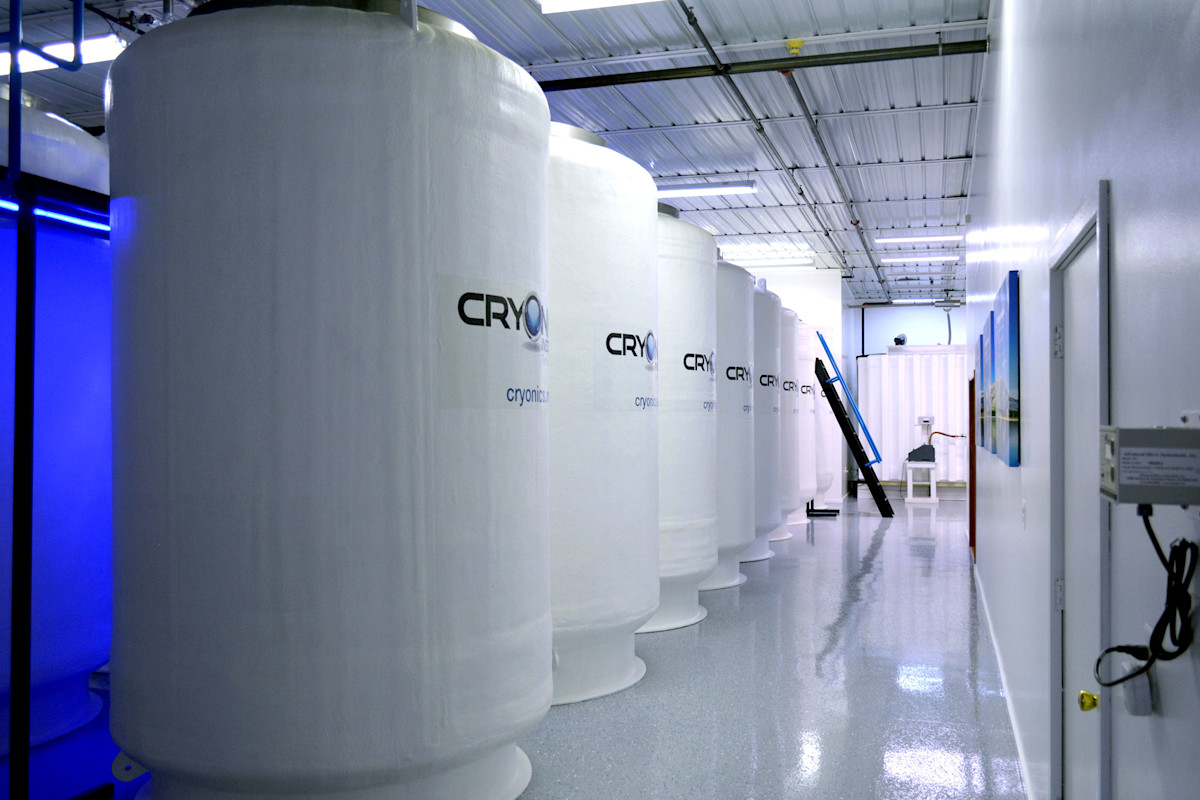
    It begins after death, it is required that there be formal consent given prior. Time is extremely important in this procedure, as the process starts 1-2 minutes post-death. First, there is rapid cooling in an ice bath, then artificial circulation through CPR-like support. The required amounts of cryoprotectants are then injected, and cooling continues to occur. After this, the body will be stored in liquid nitrogen at a temperature of -196 degrees Celsius. It is important to note that this is only the preservation process, and the revival process has not been tested yet, as there is currently no technology that exists that would allow for this to occur. The cellular damage would have to be repaired, along with reversing the initial cause of death, and restoring any issues with brain function and memory.

    While it is possible that cryonics may work, there is no current concrete proof. However, there is progress being made when it comes to research about hypothermia, which is used to protect the brain and can extend survival after cardiac arrest. There are also advances in organ preservation, such as the heart, lungs, and skin, which are important for transplants. It is important to note, though, that there is currently no explicit research on cryonics and the revival, as there are legal issues, along with pessimistic views on the actual feasibility of cryonics.

    Authored by Diya Vipin Pillai and Katherine Yao