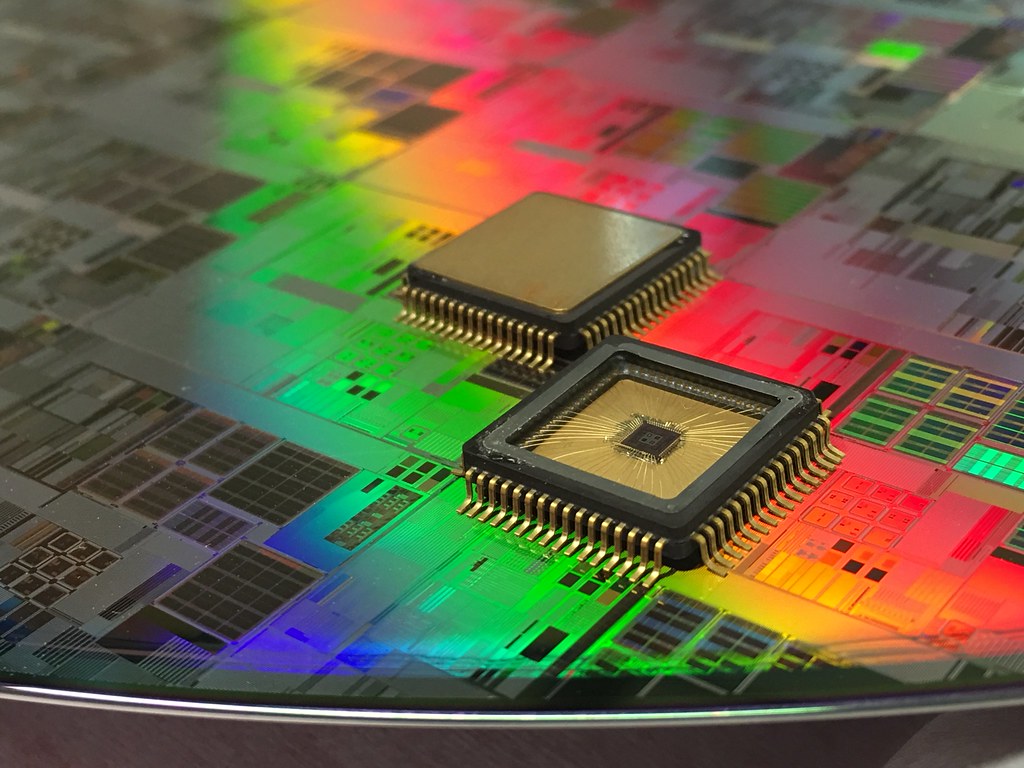
As much as artificial intelligence (AI) has become a vital tool in many corporations, it has simultaneously become one of the drivers of the economic and business world. In terms of manufacturing, some of the leading companies have been Google, Apple, and Nvidia, with the latter dominating markets with its GPU chips.
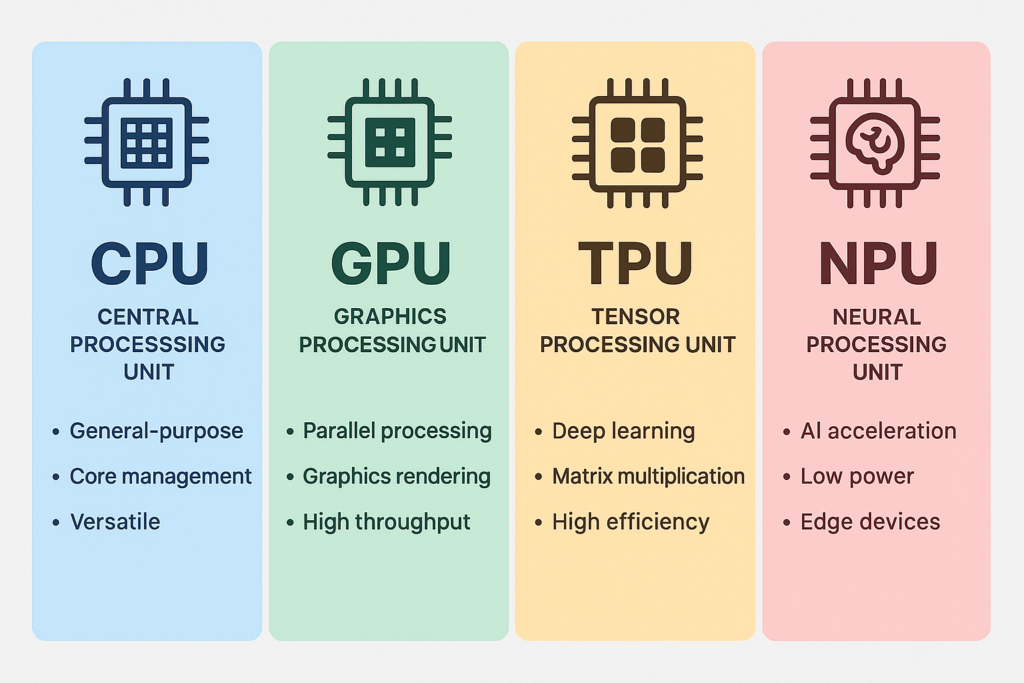
The graphics processing units Nvidia has been creating have greatly contributed to the success of the AI industry, but were not designed with artificial intelligence in mind. These units can perform multiple calculations at once (parallel calculations), which is necessary for the calculations needed for large AI models. However, as they were originally designed to assist with computer graphics, they have some inefficiencies in translating calculations.
However, in April 2026, Google announced an extended partnership with Intel to continue its decade-long development of TPUs. These tensor processing units are designed solely for matrix multiplication, the main calculations needed to run and train large AI models. Matrix multiplication are calculations with vast arrays of numbers performed at the same time.
Therefore, since 2016, Google set out to develop chips that were highly specialized for machine learning workloads rather than general computing. Optimized for both AI training and interference, the latest TPU generations are designed to deliver more performance per dollar and have better energy efficiency compared to previous generations. While the GPU’s ability to perform parallel calculations greatly aided the training and maintenance of several AI models, TPUs were designed wholly around the idea of running large AI models. This specialization sets them apart and creates new opportunities for Google and Intel in their partnership.
Apart from the increasingly efficient developments, the creation of custom TPUs also introduces Google as a stronger competitor against Nvidia and eliminates the need for the former to rely on the latter for chips. Several companies, such as Anthropic and Meta, have also looked to the consumption of TPUs instead for their capacity, setting the innovation up as a commercial product rather than an internal tool. At this point, the race is shifting: the rivalry for the better chip has evolved into racing for the chip with the best AI infrastructure ecosystem.
This extended partnership also comes at a key time in terms of the supply chain. The demand for semiconductors has only grown with the increasing development of AI, and has caused the manufacturing capacity to stretch too thin. Google has reportedly explored further manufacturing relationships with Intel and even Samsung, amidst the TPU partnership. The end goal is to be able to diversify production and reduce reliance on a single supplier (ex. Nvidia) as AI demand grows.
However, the production of TPUs is not all sunshine and rainbows for the tech world. As with any new technology, the tensor processing units come with some drawbacks. Since they have been developed to serve the training and running needs of large AI models, the chips are highly specialized. While this may prove useful at times, the specification can make it less flexible than general-purpose GPUs that have been tried and tested over the years.
Additionally, the introduction of TPUs does not eliminate Nvidia as a competitor for Google, as they still benefit from the mature software ecosystem being created. Furthermore, building custom silicon is not something that will happen overnight. Despite the decade of research and development Google has accomplished so far, the technology will still need an enormous investment for creation and development cycles to ensure the best product.
AI does not seem to be slowing down in its climb, and neither do the companies behind it. Time will show us how beneficial Google’s TPUs will become, but it is safe to say that the AI race will revolutionize several other streams of technology.
Leave a Reply