Category: Home

Articles in this category show up on the home page!

  • More than a Game: Studying Decisions Using Applied Mathematics

    More than a Game: Studying Decisions Using Applied Mathematics

    Today’s blog post gets a bit more theoretical. You and your partner in crime are currently in police custody due to a failed stunt. They’ve put you in separate interrogation rooms where communication is cut off. Like a scene out of a movie, the sneaky detective offers you a deal: 

    1. If you both stay silent, you each get one year in prison. 
    2. If you betray your partner, but they stay silent, you are set free, and they get three years. 
    3. If your partner betrays you while you stay silent, they are free, and you get three years. 
    4. If you both betray each other, two years for both of you. 

    Tick, tock; time is ticking! What do you do in this situation? The most rational choice is to betray your partner. No matter what they choose, betraying them will inevitably result in a lighter sentence for you. Unfortunately, because you and your partner both think this way, you betray each other and say goodbye to the taste of fresh air for two years. If both of you trusted each other, a one year sentence would suffice.  

    We broke down and studied a decision made: this is game theory. Founded by John von Neumann and economist Oskar Morgenstern, game theory studies interactive decision-making, where the outcome for each participant or “player” depends on the actions of all. A notable publisher of this wonderful theory is Professor Avinash Dixit, who was the John J. F. Sherrerd ’52 University professor of Economics at Princeton University. Dixit jokes, “If Nash got a dollar for every time someone wrote or said ‘Nash equilibrium,’ he would be a rich man.” 

    Dixit isn’t wrong, though. Nash equilibrium, an important concept within game theory, is everywhere. We’ll use another example here: You finally got those tickets to the Don Toliver concert. Everyone is sitting down, but you want a better view. You rise from the stands with desperate hopes. Suddenly, the person behind you is overcome with anger at the fact that you are blocking their view. Within minutes, almost everyone in the audience is standing. Now, not only are your legs screaming, but your view is still the exact same as when everyone was sitting. If everyone decides to sit down, you’ll all benefit, but you can’t sit down now because you won’t be able to see the stage. You are forced to stay standing. 

    This is the Nash Equilibrium: A set of strategies where no player can benefit by changing their strategy unilaterally, assuming other players keep theirs unchanged.

    Game theory branches into different types of games. We’ll discuss them here:  

    1. Timing: Simulations & Sequential
      1. In simultaneous games (ie. Rock-Paper-Scissors or Prisoner’s Dilemma), players act at the same time without knowing each other’s choices.
      2. In sequential games (ie. Chess), players take turns and can react to previously made moves. 
    2. Information Sharing: Perfect & Imperfect
      1. Poker is a game of imperfect information (hidden cards)
      2. Chess is a game of perfect information (all moves are visible to both players)

    But game theory is so much more than a study, it has numerous real world applications. Most prevalent is its application in economics and business. The concept of game theory is used in pricing strategies during price wars, bids in government spectrum auctions, or when deciding on launching a new product. It is also used in evolutionary biology. Biologists use game theory to explain how animals evolve cooperative behaviors (such as meerkat warning signals or grooming primates) despite individual survival risks. In history, it was used in the Cold War and geopolitics as well. Nations apply game theory to nuclear deterrence and diplomacy, such as the concept of Mutually Assured Destruction (MAD), where neither side attacks because total destruction is guaranteed for both. As a result, some countries have implemented a No First Use policy to ensure that our world doesn’t end up in cinders, though the number could be increased. 

    To sum it all up, game theory is so much more complicated than you might think and its definitions and applications branch to numerous fields such as mathematics, economics, business, biology, political science, and even psychology. What began as a mathematical model to understanding decisions has since evolved to a way for understanding the real world. Game theory is truly more than just a game. 
  • Advancements in AI Cybersecurity

    Advancements in AI Cybersecurity

    AI needs no introduction– it’s becoming more efficient and capable in almost any situation imaginable. However, similar to any type of technology, it is constantly being improved. In the past month, numerous leading companies have taken steps towards one major improvement: security.

    This focus comes from several factors, including the discovery of models’ tendencies to make reckless decisions, even in closed environments. Additionally, Anthropic has revealed that earlier models of Claude took unauthorized actions against systems on the real internet in “single-minded pursuit of their goals” (Lakshmanan 26). While the company had paused other evaluations to fix this issue as well as create additional safeguards, it does raise the question: What other security issues does AI have?

    Google, Anthropic, and OpenAI all analyzed this issue and came out with new models and systems in order to address the problem.

    Google and Gemini 3.8 Flash Cyber:

    A few weeks ago, Google announced its new model, Gemini 3.8 Flash Cyber, calling it the most capable cybersecurity model to date. So far, they have released it as part of the Fairwind Program, an initiative connecting high-priority defenders, including government, healthcare, and telecommunications, with early access to these increased-security models to build stronger defenses at a quicker rate. 

    This initiative not only helps these sectors build safer infrastructure but also protects the millions of people who rely on them daily. Imagine calling up a healthcare provider who has recently started implementing AI models as part of their system. Both you and your provider may have had to worry about your security on top of other problems at hand. While increased security will not completely eliminate issues, it does take a step toward ensuring better peace of mind.

    Anthropic and Claude Fable/Mythos:

    Meanwhile, Anthropic launched two separate models serving different purposes and levels of security: Claude Fable 5.1 and Claude Mythos 5.1. The former is the generally available version that’s designed for heavy-duty, long-running agent workflows. On top of that, Anthropic cut down cache read costs by 75%, making it much more affordable for enterprises to run persistent tasks that constantly revisit codebases or documentation.

    Unlike Fable, Mythos 5.1 is more restricted, currently only for cybersecurity programs and life-science research. The model is also adept at recognizing and shutting down malicious agentic coding, keeping systems safer overall.

    OpenAI and Astra:

    Last but not least, OpenAI joined the group with its upcoming model, Astra, which has been announced to meet the “critical cybersecurity capability threshold” under its Preparedness Framework. This model can independently spot and exploit vulnerabilities or even run a full-scale cyber attack from just a high-level instruction, removing most human interaction with the system.

    However, to keep things from going off the rails, OpenAI is rolling out its advanced cybersecurity features to a select group of testers through the Daybreak Blye program, while building in heavy safeguards and classifiers to block unauthorized actions and prompt injections. OpenAI has stated that Astra is not perfect: it may flag legitimate users as cyber misuse or unauthorized activity. This would continue to be improved upon as Astra gets ready for its release.

    As AI models get smarter and more autonomous, the line between helpful assistance and risky behavior has become a bit blurry. The race among tech giants to build hyper-capable cyber models shows just how fast the landscape is changing. Ultimately, keeping these powerful systems safe isn’t just about winning benchmarks– it’s about making sure that as AI continues to grow, it remains a tool we can actually trust.

  • Synesthesia

    Synesthesia

    The United States Population makes up 4.2% of the total world population. That’s around 342 million people which when you look at it like that, seems like a lot. 

    Let’s add another 0.2% to that. Approximately 16.6 million people. 

    In total, this is above 350 million people. That’s 1 in 23 people.

    Now, what do all these values mean?

    1 in 23 people you meet, has some form of fully-fledged synesthesia, defined as the brain confusing multiple unrelated senses, causing you to experience more than one sense simultaneously.

    How do people perceive senses?

    Typically, the brain follows three steps. Detection, signaling, and processing. Detection is when the senses – hearing, sight, touch, taste, and smell – pick up your surroundings. Next, signaling. The organs related to these senses send signals to your brain, telling it what you are experiencing. Then, the brain processes these signals, allowing you to become aware of what is happening. 

    Here’s an example. 

    Your nose picks up the smell of something burning on the stove. Then, your nose sends signals to the brain. Finally, the brain processes the signals and lets you know that there is something burning. 

    How does synesthesia work then?

    People with synesthesia have different processing steps. Instead of the information being processed with a singular part of the brain, it goes through two or more areas of the brain at the same time, causing multiple effects. 

    For example, chromesthesia. When people with chromesthesia hear a sound, they recognize it for whatever it may be, but in addition to processing the sound, they also see a color due to the sound, causing chromesthesia to also be known as sound-to-color synesthesia. 

    Chromesthesia, like any other type of synesthesia, is not interpreted exactly the same for all people with the condition. Some experience the color as if they are actually seeing it, while others have a different perception known as the “internal screen” effect. The color is seen “internally” and in the head, rather than an actual sighting. 

    How many kinds of synesthesia are there?

    For each sense, the brain can identify many different things. Sight leads to color, pattern, texture, and shape; hearing leads to volume pitch and frequency; and touch leads to temperature, pressure, texture, vibration, and pain. Due to the many combinations between the senses, researchers estimate that there could be over 150 forms of synesthesia, however only 60 are formally identified. 

    Some forms are chromesthesia, previously mentioned; auditory-tactile synesthesia, hearing sounds leads to feeling touch-based sensations; hearing-motion synesthesia, people hear sounds in relation to seeing moving objects; and day-color synesthesia, certain colors are associated with each day of the week.

    Why does synesthesia occur?

    While experts don’t fully understand why synesthesia happens, they have categorized it into three specific categories. 

    Firstly, developmental synesthesia. Those with developmental synesthesia are “neurodivergent”, meaning that their brain developed and works in a way that is separate from people whose brains developed “neurotypically”. The factors that may lead to developmental synesthesia are brain development, brain structure, and genetics. 

    There is existing evidence that suggests that early on in life, all people have synesthesia, meaning it must fade for all people, causing only a small percentage of people to have it. The small percentage of people who do have it, have more connections between their brain areas, which could explain why multiple brain areas activate due to one type of sensory input. In addition, it could explain why people with autism spectrum disorder have triple the rate of synesthesia in comparison to people without autism spectrum disorder. 

    Genetics wise, synesthesia appears to run in families, however since there is variation from person to person, it implies that it is not learned, but rather genetically based.

    Secondly, there is acquired synesthesia. Those who acquire synesthesia typically have this occur due to damage in the brain. Experts who have studied the topic believe that it is because the connections within the brain change and evolve as the brain recovers from injury.  

    However, acquired synesthesia tends to be different from developmental synesthesia. Acquired synesthesia is typical;ly less consistent and more circumstantial than developmental synesthesia and can also also disappear with time. 

    Finally, there is drug-induced synesthesia. Nonmedical usage of certain drugs in certain amounts can cause synesthesia. These drugs are known as psychedelics, including LSD, dimethyltryptamine, peyote, and psilocybin. 

    Drug-induced synesthesia is emotion dependent and naturally, only occurs as a result of taking the drug, not organically. 

    Does synesthesia require prevention or treatment?

    Aside from drug-induced synesthesia, synesthesia is not preventable and doesn’t require treatment, however some forms of synesthesia can be managed or minimized if the effects are disliked. 

  • The Perfect Shot: The Math Behind the Golden Ratio 

    The Perfect Shot: The Math Behind the Golden Ratio 

    Humans are greedy—for knowledge, for power, and quite frankly, anything we can get our hands on. Our puny desire to explain the questions of the universe leaves us struggling to grasp just how unfathomable our world is. Fortunately, mathematics serves as a medium in an attempt to conceptualize such otherworldly phenomena, one being the golden ratio.  

    The golden ratio can be seen everywhere and at any given moment. It is a naturally occurring mathematical phenomena that can be seen in nature to optimize space and sunlight. 

    Sunflower seed arrangement exhibiting phyllotaxis, a natural pattern 

    associated with the golden ratio. 

    What’s really behind the golden ratio is a concept most students have been exposed to since elementary school: a sequence. More specifically, the golden ratio is based on the mathematical concept of the Fibonacci sequence. 

    While the name may beg to differ, the Fibonacci sequence was in reality founded by ancient Indian mathematicians centuries before explored by western mathematicians. It is named after the Italian mathematician Leonardo Pisano (also known as Fibonacci), who introduced the number sequence to Western Europe in 1202. 

    This series is a sequence of numbers where every number is the sum of the previous two numbers. For example, the very first term will begin with 0 and be followed by 1. 0 + 1 = 1, and 1 + 1 = 2. Thus, the sequence continues, 0, 1, 1, 2 … and so on. It can be written in general form as a recursive sequence such that

    Fn = Fn-1 + Fn-2

    where n = the nth term of the sequence

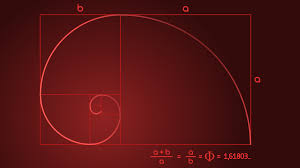
    As the sequence gets larger, if you divide any Fibonacci number by the one immediately before it, the answer gets closer and closer to 1.618, which is the Golden Ratio! 

    If you want to find a specific Fibonacci number without adding up all the numbers before it, there’s a formula for that too—Binet’s Formula. 

    Fn = [ɸn – ( –ɸ)–n ] / √5 

    where ɸ = 1.618… (the Golden Ratio) or more accurately ɸ = (1 +  √5) / 2. 

    This sequence can also be drawn into a spiral. First start with the squares of the numbers in the sequence (02 = 0, 12 = 1, 12 = 1, 22 = 4). These numbers will all make small rectangles side by side. Then, you can link opposite corners with a curved line, making a spiral.

    This spiral (and its mathematical counterpart—the logarithmic golden spiral) is used mathematically to study fractal geometry, self-similarity, approximation limits, and polar coordinate systems. While artists value its beauty, mathematicians use it as a foundational tool to understand growth patterns where a shape scales up without changing its core proportions. In example, it can be used to calculate a hawk diving at its prey at a visually appealing angle while keeping it proportional to the lens. 

    Another application of the Fibonacci sequence is in the stock market. The Fibonacci sequence is used in technical analysis to identify potential support and resistance levels during price pullbacks. Traders use specific ratios derived from the sequence (most notably 23.6%, 38.2%, 50%, and 61.8%) to determine optimal entry points, stop-loss orders, and profit targets. The Fibonacci sequence (0, 1, 1, 2, 3, 5, 8, 13, 21, 34, etc.) has unique mathematical properties, where each number is the sum of the two preceding numbers. In stock trading, these numbers are converted into key percentages representing how much a stock’s price might “retrace” before continuing its overarching trend. Below is a breakdown of these key percentages: 

    38.2% & 61.8%: Considered the “golden ratios” of trading. These levels indicate areas where an asset is likely to bounce off its lows or find resistance during a rally.

    50%: Though technically not a true Fibonacci number, it is universally accepted in technical analysis (inspired by Dow Theory) as a primary pivot point.

    23.6%: Indicates a very short-term or shallow retracement, often watched in highly trending stocks.

  • The Silicon Race – Google’s Custom AI Chips

    The Silicon Race – Google’s Custom AI Chips

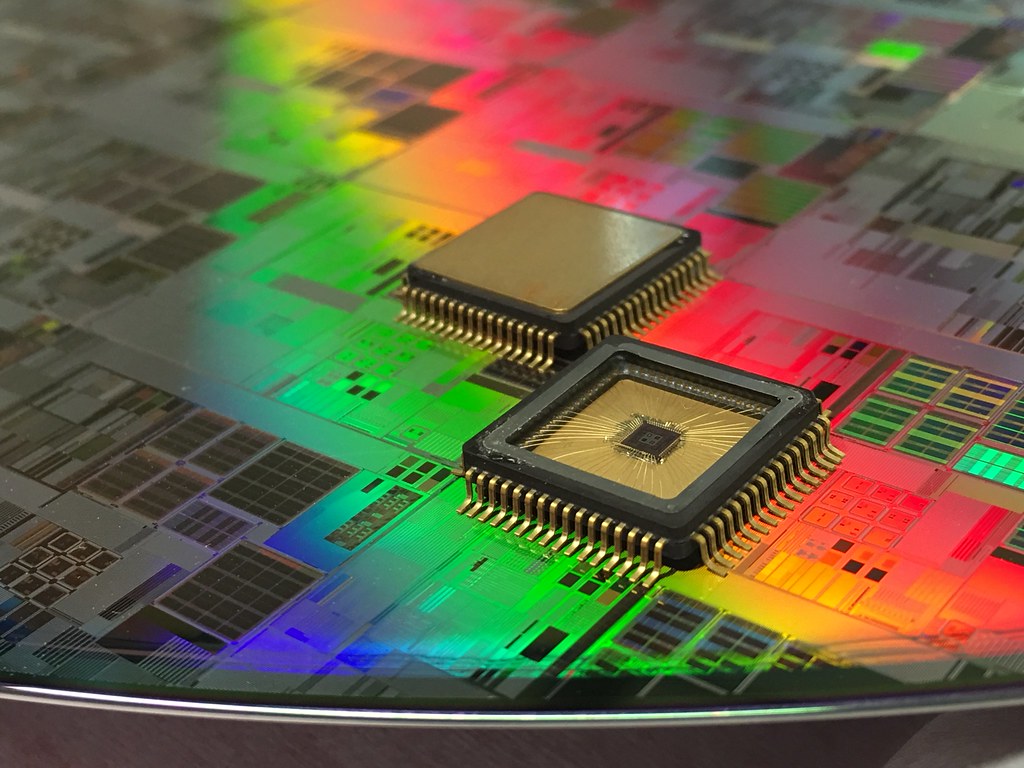
    As much as artificial intelligence (AI) has become a vital tool in many corporations, it has simultaneously become one of the drivers of the economic and business world. In terms of manufacturing, some of the leading companies have been Google, Apple, and Nvidia, with the latter dominating markets with its GPU chips. 

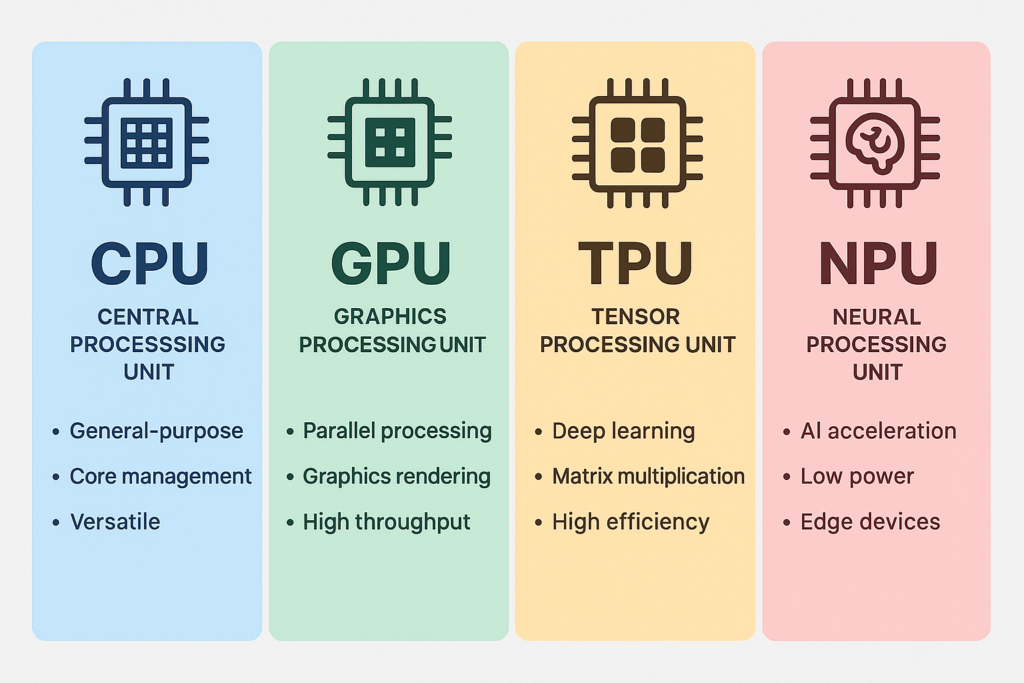
    The graphics processing units Nvidia has been creating have greatly contributed to the success of the AI industry, but were not designed with artificial intelligence in mind. These units can perform multiple calculations at once (parallel calculations), which is necessary for the calculations needed for large AI models. However, as they were originally designed to assist with computer graphics, they have some inefficiencies in translating calculations.

    However, in April 2026, Google announced an extended partnership with Intel to continue its decade-long development of TPUs. These tensor processing units are designed solely for matrix multiplication, the main calculations needed to run and train large AI models. Matrix multiplication are calculations with vast arrays of numbers performed at the same time. 

    Therefore, since 2016, Google set out to develop chips that were highly specialized for machine learning workloads rather than general computing. Optimized for both AI training and interference, the latest TPU generations are designed to deliver more performance per dollar and have better energy efficiency compared to previous generations. While the GPU’s ability to perform parallel calculations greatly aided the training and maintenance of several AI models, TPUs were designed wholly around the idea of running large AI models. This specialization sets them apart and creates new opportunities for Google and Intel in their partnership.

    Apart from the increasingly efficient developments, the creation of custom TPUs also introduces Google as a stronger competitor against Nvidia and eliminates the need for the former to rely on the latter for chips. Several companies, such as Anthropic and Meta, have also looked to the consumption of TPUs instead for their capacity, setting the innovation up as a commercial product rather than an internal tool. At this point, the race is shifting: the rivalry for the better chip has evolved into racing for the chip with the best AI infrastructure ecosystem.

    This extended partnership also comes at a key time in terms of the supply chain. The demand for semiconductors has only grown with the increasing development of AI, and has caused the manufacturing capacity to stretch too thin. Google has reportedly explored further manufacturing relationships with Intel and even Samsung, amidst the TPU partnership. The end goal is to be able to diversify production and reduce reliance on a single supplier (ex. Nvidia) as AI demand grows.

    However, the production of TPUs is not all sunshine and rainbows for the tech world. As with any new technology, the tensor processing units come with some drawbacks. Since they have been developed to serve the training and running needs of large AI models, the chips are highly specialized. While this may prove useful at times, the specification can make it less flexible than general-purpose GPUs that have been tried and tested over the years.

    Additionally, the introduction of TPUs does not eliminate Nvidia as a competitor for Google, as they still benefit from the mature software ecosystem being created. Furthermore, building custom silicon is not something that will happen overnight. Despite the decade of research and development Google has accomplished so far, the technology will still need an enormous investment for creation and development cycles to ensure the best product.

    AI does not seem to be slowing down in its climb, and neither do the companies behind it. Time will show us how beneficial Google’s TPUs will become, but it is safe to say that the AI race will revolutionize several other streams of technology.

  • Do We Ever Reach the Finish Line? Zeno’s Dichotomy Paradox Explained

    Do We Ever Reach the Finish Line? Zeno’s Dichotomy Paradox Explained

    In the depressing trenches of AP studying, your eyes fixate on a half-opened bag of chips right across the living room. Naturally, you decide to move towards the chips with purpose. It seems simple—but according to Zeno of Elea, you might never actually reach it. 

    Of course, nothing should come between you and your chips. It turns out Zeno isn’t some random, but an incredibly famous Greek philosopher, well-known for proposing various interesting and mind-boggling paradoxes. Zeno was a student of Parmenides and because of that, many tend to believe his paradoxes were meant to defend his teacher’s idea of an unchanging reality. However, this interpretation mostly comes from later speculations, including those from Plato’s dialogues. Some of his paradoxes include The Antinomy of Large and Small, The Antinomy of Limited and Unlimited, and The Paradoxes of Motion—one of which is the Dichotomy Paradox. 

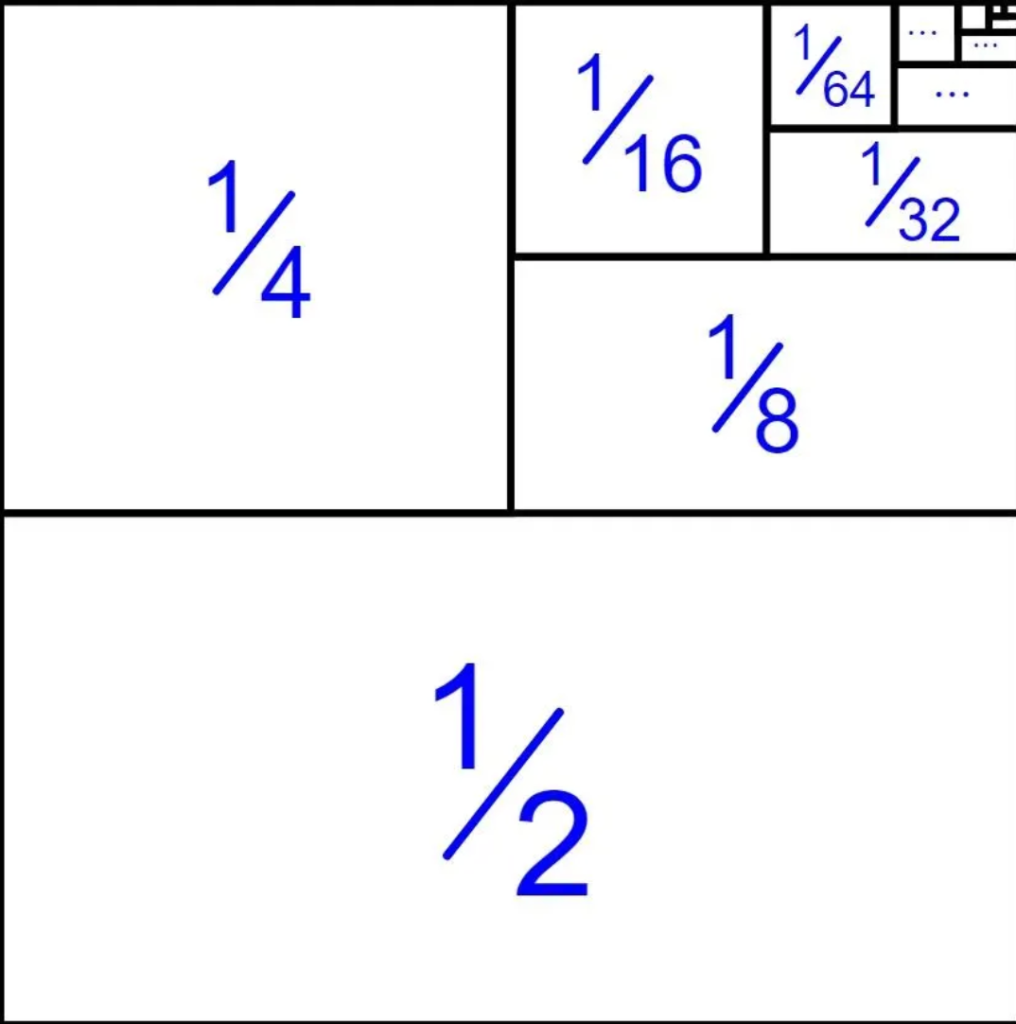
    The Dichotomy Paradox is explained by Zeno as follows: let’s say a runner intends to meet a goal. If the goal is one meter away, the runner must cover a distance of ½ meter, then ¼ meter, then ⅛  meter, and so on ad infinitum. Because this process continues indefinitely, Zeno argues that the runner can never reach the final goal. To expand, the regressive version of the Dichotomy Paradox states that the runner can’t even take the first step because any step may be divided conceptually into a first half and a second half. Before taking a full step, the runner must take a ½ step, but before that, he must take a ¼ step, but before that, a ⅛ step, and so forth ad infinitum. Seems convincing, right? 

    Well, no, not really. In fact, this paradox has been resolved in both math and physics. 

    To begin, let’s envision the runner with an impending goal of one meter. Zeno breaks this one meter into ½ meter, ¼ meter, ⅛ meter, and so on forever. To express the total distance traveled:

    Total Distance Traveled = ½ + ¼ + ⅛ + … 

    By a convergent geometric series, we see that the total distance equals exactly one meter. Hint: Notice how the sum of all the individual boxes still results in the whole box. See, even though the runner is completing infinitely many subdivisions, the total distance still adds up to a finite amount. 

    Unfortunately for us, mathematics alone isn’t enough to provide a full solution. To fully resolve this paradox, we need to realize that this paradox isn’t simply about dividing infinite parts, but the physical concept of a rate. Zeno’s paradox feels convincing because it only takes into account distance, without factoring in time. Motion isn’t limited to how far one moves, but how far one goes in a select amount of time. “The reason objects can move from one location to another (i.e., travel a finite distance) in a finite amount of time is because their velocities are not only always finite, but because they do not change in time unless acted upon by an outside force” (Siegel 2020). 

    There is another detail of the Dichotomy that needs resolution. How does Zeno’s runner complete the trip if there is no final step or last member of the infinite sequence of steps (intervals and goals)? During the process of “taking a trip,” can there be an absence of the crucial “last step”?  The Standard Solution answers “no,” while the intuitive answer “yes,” held by Zeno, Aristotle, and the average person today, must be rejected when embracing the Standard Solution. Even if there is no “last step,” the runner can still finish the journey because completion stems from the limit of infinitely many steps, not the final step itself. 

    Now, unfortunately for Zeno, you can confidently say you made it across the room and got the chips—no paradox stopping you.

    Authored by Chandhana Lingam Muhilan and Katie Huang

  • The Evolution of Autonomy Generative AI to Agentic AI

    The Evolution of Autonomy Generative AI to Agentic AI

    Artificial Intelligence – who hasn’t heard of it?


    For the past few years, we have truly lived in the world of AI innovation. And, of course, the most common places we have seen it used are in generative AI models such as ChatGPT, Gemini, Claude – the list goes on. Recently, however, the industry has seen the birth of a new model type: Agentic AI. These new models, including OpenClaw, can make autonomous decisions, opening an entirely new door across multiple industries.

    What Is Generative AI?

    To start, let’s get a background on the models we’re more familiar with. Generative AI is largely used for content creation, such as images, text, code, and audio, after receiving a prompt from a human user. While this in itself is a great accomplishment, it is still a reactive model– it can only respond to the instructions it is given. Beyond this, generative artificial intelligence has become highly skilled at understanding language and aiding in more creative ventures.

    However, it has its flaws. For one, generative AI models are not memory-retentive. They will not carry information over between sessions, sometimes even in the same one if the interaction is prolonged. This makes them unreliable for long-term projects and jobs.

    As we discussed before, a model like ChatGPT will not go beyond whatever the user asks of it. In other words, it has no autonomy. It’s a tool made for people to use and interact with, not one that will take its own initiatives. But as we will see, that may not be the case anymore.

    What Is Agentic AI?

    Agentic AI, in contrast to generative AI, has been designed especially for autonomy, meaning that it will be able to make its own decisions, among numerous other developments. According to the Aziro Marketing Team, agentic AI will take the large language models (LLMs) in use a step further by incorporating “goal-oriented planning, persistent memory, and execution engines” (Aziro 25). These assistive models will be able to take high-level goals and be able to make the decisions and actions to meet them, regardless of human interaction.

    Agentic AI is built on a reasoning-to-action loop. This can generally be broken down into five steps:
    Task decomposition – A larger goal is broken up into smaller subtasks
    Delegation – These tasks are split amongst relevant tools or agents
    Observation – The AI reviews the results of each section, modifying outputs or adjusting the framework accordingly
    Synthesis – It relates the outputs to certain tasks to complete the goal
    Adaptation – Based on results, the agent modifies its “route” and continues the loop
    From a human standpoint, this reasoning process can also help users and teams relying on the AI’s task management to trust its decisions more, as it should be able to provide concrete reasoning for each of its actions.

    As of right now, a major example of agentic AI is the tool OpenClaw. OpenClaw allows users to create various assistants for a multitude of desktop applications, including WhatsApp, Gmail, etc. These assistants are able to complete tasks within these apps, including sending emails, organizing schedules, and handling web research. The employment of AI will certainly propel numerous fields, including cybersecurity, healthcare, and finance.

    The Dilemma of Ethics

    As helpful as this type of model may seem, it certainly has its drawbacks, and at the forefront of worries at the moment is ethics. While the AI is being trained to mimic human decision-making, it may also take actions that go against common morals due to its reasoning process. A Boston University professor, Van Alstyne, shares his thoughts, questioning, “What happens when agent decision ability exceeds its formal authority?” (Murray 25). These questions of authority would be especially present in high-stakes settings, including government decisions and security.
    To mediate the potential effects of unlimited control, he states that companies will have to place rules on what the agents can do, as well as create specific interfaces that they can use.

    Another pressing issue is within the job market. With agentic artificial intelligence being designed specifically to take the place of human tasks, we would be faced with even more job insecurity than what we are currently experiencing with AI’s effects. Currently, around 13% of Americans say they have lost their jobs due to AI or the like, and with the introduction of agents, this is sure to increase. It will be up to the industry to be able to find a balance, allowing for the wonders of AI to develop while also protecting the careers of many.

    Agentic AI represents a great step forward in the world of technology and is sure to improve upon its many capabilities. Changing from a skilled chatbot to an extraordinary assistant, this evolution will surely bring open doors in numerous industries for greater potential. With its impact reaching far and wide, it will be exciting to see where it takes us next.

    Authored By Diya Borundiya and Anika Yadiki

  • The Science of Cryonics

    The Science of Cryonics

    In the 1960s, Robert Ettinger first created the concept of cryonics in his book, The Prospect of Immortality. Now, you may be wondering: what exactly is cryonics?

    Cryonics is the preservation of humans or animals at very low temperatures after legally announced death. Its goal is to eventually be able to revive the preserved beings and cure any possible disease they may have. However, currently, only preservation is possible, not revival.

    So… how does it work then?

    The science behind cryonics originates from the concepts of cryopreservation and cryobiology. In nature, this can be seen in animals like the northern wood frog, which survives freezing conditions by allowing 60 to 70 percent of its body water to freeze for multiple months, also known as cryoprotection. The lowered temperatures of the tree frog slow or stop metabolism, protecting it from ischemic injury – tissue damage caused by lowered or no blood flow.

    However, this freezing is not possible without cryoprotectants(CPAS), such as glycerol and dimethyl sulfoxide(DMSO), which prevent ice crystal formation. The northern wood frog uses glycerol and glucose as the cryoprotectant in their blood, stored in the liver glycogen, and turned into glycerol and glucose once the freezing process initiates.

    An important thing to note is that the cryoprotectants do not ensure no difficulties, as there are various methods to cryopreservation – programmable slow freezing, vitrification, and low-CPA vitrification – all of which end with the same general end result, yet the method of vitrification reduces or prevents the possibility of damaged ice crystals being formed. Vitrification turns the tissue into an almost “glass-like” state and allows cells or tissues to be frozen without freezing damage.

    This leads us to today’s cryopreservation success. Cells, sperm, and embryos are all relatively common examples of successful freezing and revival that are used in modern medicine. In addition, tissues and organs can sometimes be preserved in a shorter-term time span, but still preserved nonetheless. One example is brain tissue, known to be highly complex and fragile, which can only be partially preserved, as only some neural markers remain intact.

    These issues with freezing tissue and organs, which are what make up the human body, cause freezing a whole human to be problematic.

    There are also many other problems beginning with cryodamage, where ice crystals damage cells and possibly structural stress, leading to cracks or ruptures. Next, there are brain preservation issues, which were partially mentioned before. As the brain is what runs the body, it is the most important organ to preserve, however anoxia (oxygen loss) and reperfusion injury (damage caused by the return of blood) are two main problems. It is also unknown if memories would survive the freezing and revival. The chemicals used in cryonics could also cause damage to the cells due to the high concentrations needed, along with the matter of the different cell types, which cause different issues. Cryonics uses one method of preservation for the entire body, which could prove to be a problem in the future when revival attempts are made.

    Apart from scientific issues, there are also more typical matters, such as cost, which can range from $28,000 to $200,000 and would require lifelong planning; legal and ethical issues, since cryonics is not a legally recognized medicine; and simply the limited research revolving around the topic.

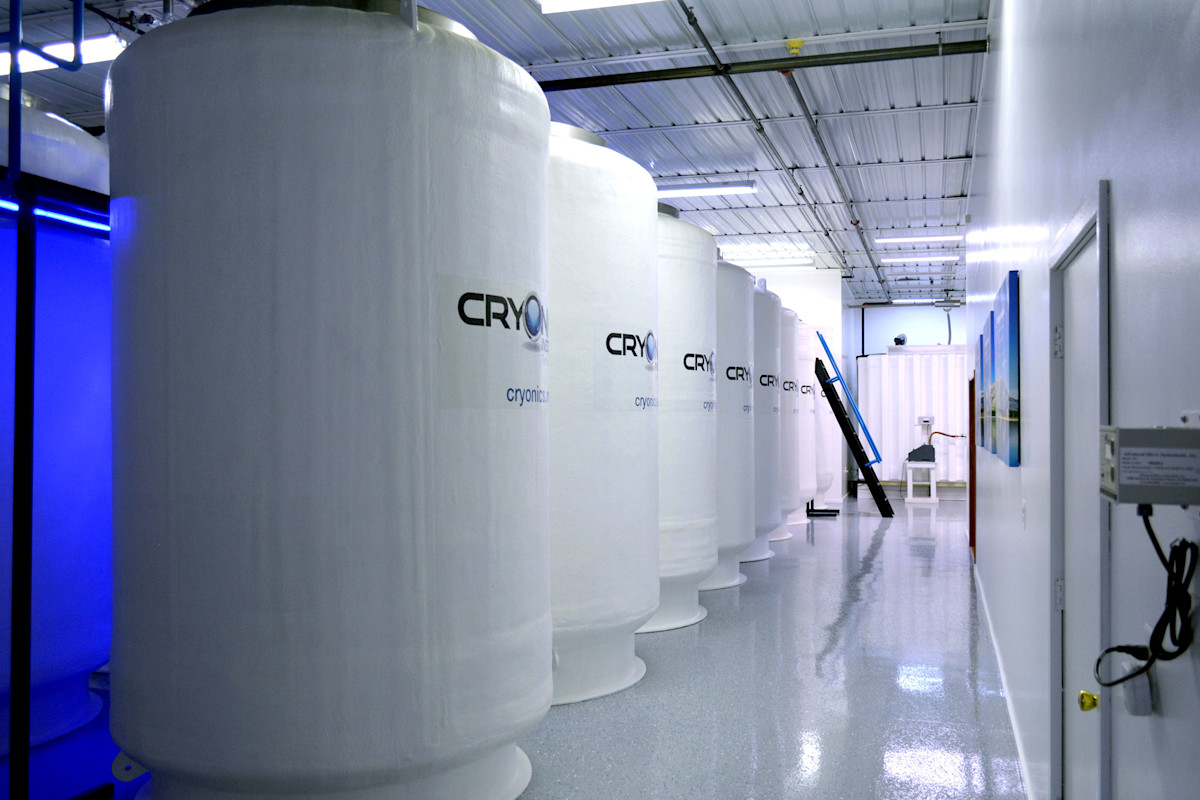
    Despite the possible problems, there are claims of 300+ patients in a facility in the United States under the Alcor Life Extension Foundation, with over 1,200 people signed up for the procedure post-death as of 2014.

    You may now be asking, “What exactly is this procedure?”

    It begins after death, it is required that there be formal consent given prior. Time is extremely important in this procedure, as the process starts 1-2 minutes post-death. First, there is rapid cooling in an ice bath, then artificial circulation through CPR-like support. The required amounts of cryoprotectants are then injected, and cooling continues to occur. After this, the body will be stored in liquid nitrogen at a temperature of -196 degrees Celsius. It is important to note that this is only the preservation process, and the revival process has not been tested yet, as there is currently no technology that exists that would allow for this to occur. The cellular damage would have to be repaired, along with reversing the initial cause of death, and restoring any issues with brain function and memory.

    While it is possible that cryonics may work, there is no current concrete proof. However, there is progress being made when it comes to research about hypothermia, which is used to protect the brain and can extend survival after cardiac arrest. There are also advances in organ preservation, such as the heart, lungs, and skin, which are important for transplants. It is important to note, though, that there is currently no explicit research on cryonics and the revival, as there are legal issues, along with pessimistic views on the actual feasibility of cryonics.

    Authored by Diya Vipin Pillai and Katherine Yao